
With so many everyday carry trackers hitting the market in 2026, you’ll want a solution that’s real-time, reliable, and easy to share across devices. From compact Bluetooth tags to Apple Find My options, there’s a range of features to weigh—battery life, range, encryption, and durability all matter. Curious which setup fits your keys, wallet, or bag best? Keep going to compare top picks and the factors that matter before you decide.
Key Points
- Real-time tracking with instant left-behind alerts to locate everyday carry items like keys, wallets, and bags across Android and iOS.
- Ultra-slim, durable trackers (IP68, rugged, or ultra-thin designs) that fit wallets, keyrings, or straps for seamless everyday carry.
- Find My-integrated options (Air Tracker Tag, Airtag Wallet Card, Slim Card) with encrypted data, privacy, and battery-free/long-life charging.
- Apple ecosystem compatibility (MFi certified, Find My integration) plus long battery life and eco-friendly design for reliable daily use.
- Comprehensive multi-device management and family sharing to track multiple items from a single app in real time.
Bluetooth Tracker: Mini Smart Tag for Keys & Wallets
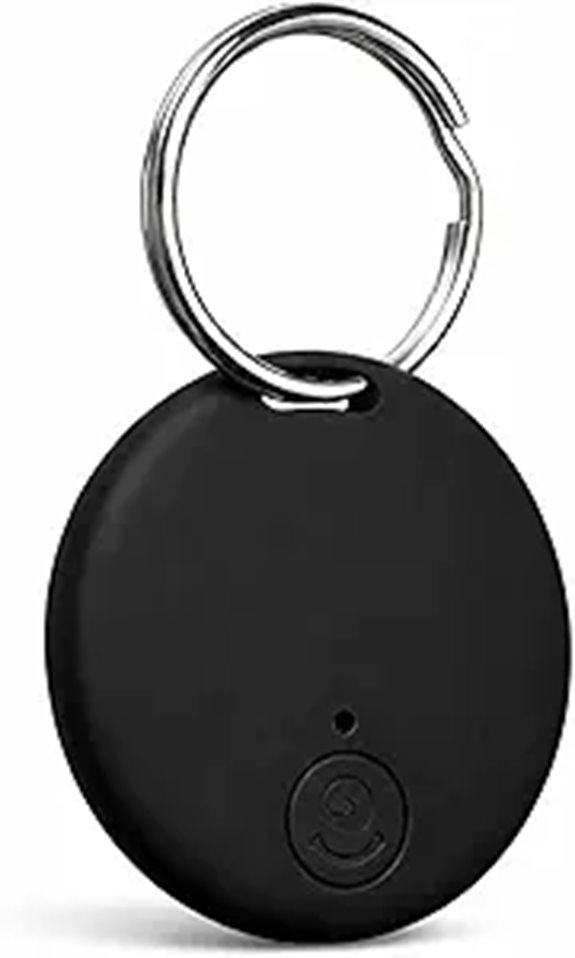
If you’re looking for a simple, reliable way to track everyday essentials, this Bluetooth Tracker stands out with its real-time locating and instant alerts. You attach the mini tag to keys, a wallet, or bags, then pair it with your phone for Android or iOS. Real-time tracking shows your item’s last known location on a map, and you’ll get instant alerts if you leave it behind. Manage multiple devices in one app and share access with family or friends. Its compact, durable design fits keyrings, wallets, or straps, making daily use effortless and stress-free.
Undetectable Car GPS Tracker for iOS Find My
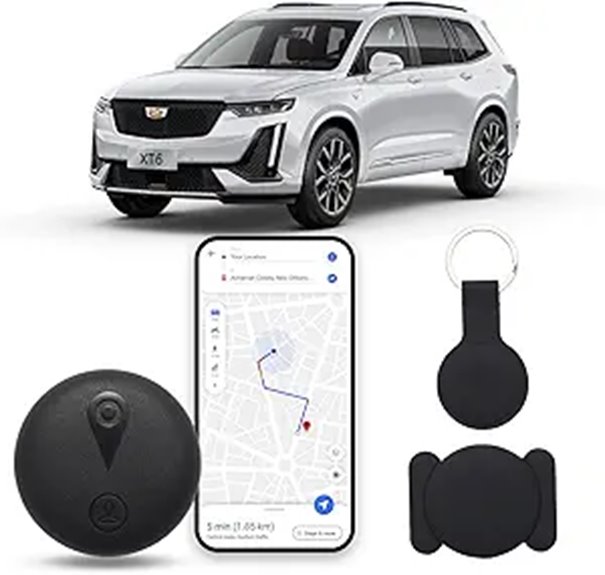
This undetectable car GPS tracker for iOS Find My is perfect if you want a discreet, subscription-free solution that stays hidden while you monitor a vehicle. You attach the ultra-slim device under a chassis or interior panel using universal magnetic clips, keeping a feather-light 0.3 oz footprint. It uses pre-installed CR2032 batteries for up to 12 months and IP68 weather resistance, so rain or car washes won’t harm it. It works with Apple Find My, providing secure location updates via Bluetooth to iOS devices. Note: it’s invisible to unauthorized users after pairing, but detectable with professional gear.
Apple MFi Airtag Wallet Tracker Card (1 Pack)
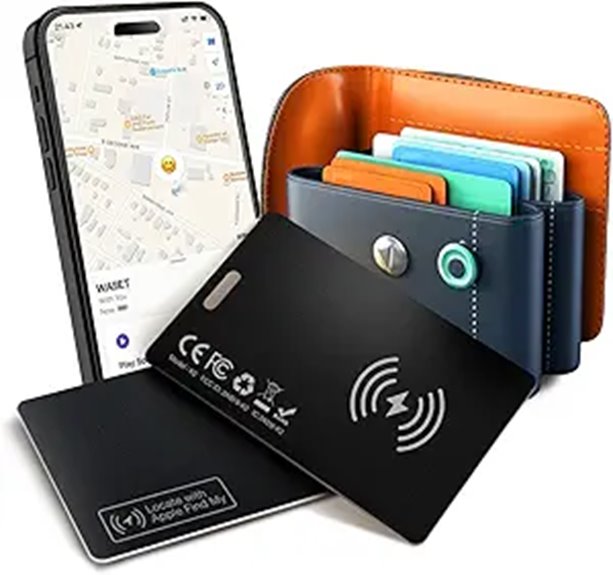
The Apple MFi Airtag Wallet Tracker Card stands out for iPhone users who want seamless, built-in Find My integration without any extra apps. You get instant setup with a 5-second press and one-tap pairing, working directly in Find My for real-time tracking. It’s iOS-only, not Android compatible, and uses Bluetooth for live locate and sound playback via Find My. Ultra-thin at 0.06 inches fits wallet slots, IP68 water resistance, and scratch-resistant materials endure daily use. A 100 dB speaker helps you locate it, with Left-Behind Alerts and Lost Mode for returns, while data stays encrypted. Recharge via Qi, up to five months per charge.
Air Tracker Tag for Find My – Bluetooth Wallet Tracker
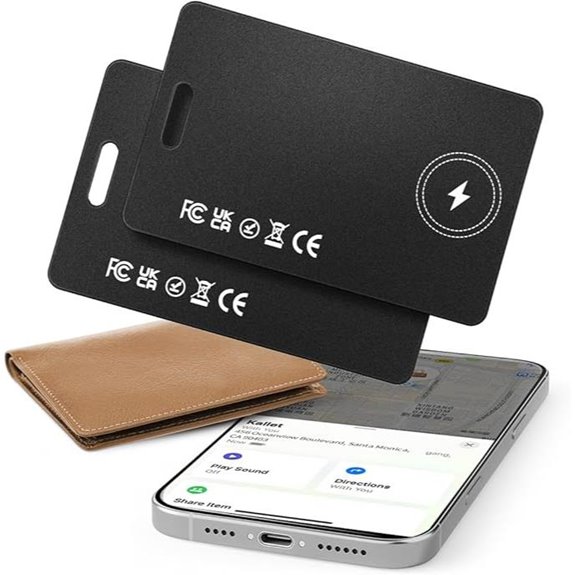
Air Tracker Tag for Find My stands out for iOS users who want real-time, offline-capable tracking right from the Apple Find My app. You’ll locate items quickly with Play Sound and real-time updates, even when offline, and get a Left Behind alert if Bluetooth disconnects. The built-in speaker reaches 80-100 dB, with a 30m/100ft range for quick finds. It’s rechargeable, delivering up to about 180 days per charge, eco-friendly and Qi-compatible. IP68 durability suits outdoor use, while privacy protects data—encrypted, anonymized, with no Apple access. Slim, 85.6 × 53.0 × 1.7 mm, it fits wallets and bags discreetly.
Wallet Tracker Air Tag Slim Card (2-Pack) for Find My iOS
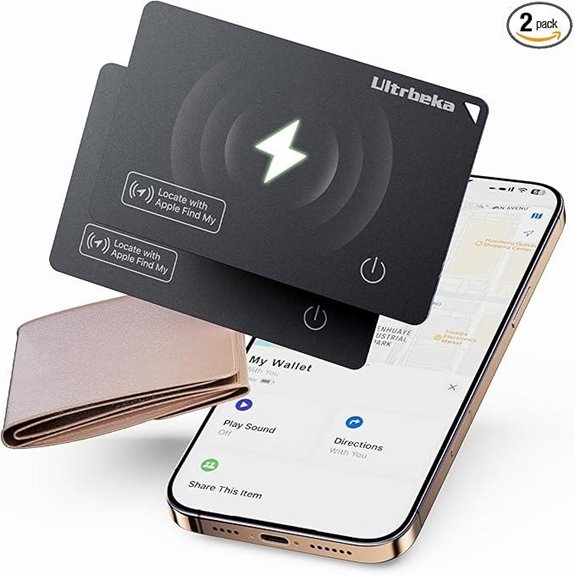
If you want a super-slim, Apple Find My–integrated tracker for your wallet or passport sleeve, the Wallet Tracker Air Tag Slim Card (2-Pack) delivers ultrathin precision at 1.8 mm thick. This 2-pack is Apple MFi certified and works with Find My on iPhone, iPad, and Mac, so you locate essentials wherever the network reaches. It’s 0.07 inches thick, fits wallets or card holders, and charges wirelessly—no battery replacements. Separation alerts trigger when you’re apart, and you’ll need Always Allow location in iOS for reliability. Praised by buyers, it balances eco-friendly design with dependable Apple ecosystem performance.
Factors to Consider When Choosing Everyday Carry Tracking
When you pick an EDC tracker, prioritize battery longevity, so you won’t chase replacements every week. Make sure it plays well with Find My, if that ecosystem matters to you, and check the form factor to fit your carry without bulk. Also, confirm waterproof durability and a simple setup to spare you ongoing hassles.
Battery Longevity Considerations
Battery longevity varies widely across everyday carry trackers. Your choice hinges on battery type, usage, and charging habits. Rechargeable models often deliver multi-month to year-long use per charge, with figures like 180 days and Qi charging highlighted. If you opt for replaceable CR2032 batteries, you’ll face periodic swaps that raise long‑term cost and maintenance. Water resistance and ruggedness can indirectly extend operation by reducing charging interruptions in tough environments. Some trackers advertise no monthly fees and low power draw via Bluetooth Find My, which can stretch life compared with GPS-enabled options. Consider how often you’ll use location features, what environments you’re in, and whether you’re comfortable swapping batteries or relying on a recharge plan. Balancing these factors helps you pick a model matching your cadence.
Find My Compatibility
Find My compatibility determines whether your tracker taps into Apple’s Find My network and uses iOS devices for locating items. If a device is iOS-only, you’ll rely on Apple Find My and won’t get Android or Google Find My Device support. Real-time locating and separation alerts hinge on the Find My app’s integration and iCloud-based location sharing, so expect smooth updates when you’re connected. Some trackers offer offline real-time tracking and left-behind alerts through Find My, even when you’re not online, which can be a big bonus for missed connections. Privacy and data handling stay within Apple’s ecosystem, with location data encrypted and access restricted within Find My. Consider how these factors align with your device ecosystem and privacy preferences.
Form Factor Fit
Choosing the right form factor matters because the tracker needs to sit flush with your item without adding bulk. Ultra-thin designs (0.06–0.07 inches) let wallet cards slide into slim slots without crowding, while compact tags (0.3–0.5 inches thick) suit keychains and small items. Card-sized trackers (1.8–3.3 inches) are ideal for wallets and passport sleeves, offering discreet placement and minimal protrusion. Dimensional footprint matters for compatibility with enclosures like wallet card slots or vehicle panels; ensure the tracker’s length and width fit the available space. Thickness and weight (usually under 0.5–1.7 ounces) influence everyday carry comfort and visibility when attached to keys, bags, or luggage. Built-in attachments—lanyard holes, magnetic clips, silicone cases—expand placement options while maintaining security.
Waterproof Durability
Waterproof durability helps guarantee your tracker survives daily use and travel mishaps. Look for a waterproof rating like IP68, which indicates protection against dust and immersion in water up to 1 meter for 30 minutes or more. Consider devices with proven water resistance for common exposures, such as rain, splashes, or brief submersion during travel. Check battery and electronics sealing to ensure sensors and connectors remain protected in wet conditions. Verify durability specs such as rugged enclosure materials and resistance to corrosion or impact from water exposure. Confirm the tracker’s performance under varying temperatures and humidity to maintain reliability in outdoor or inclement weather. Prioritize models that balance protection with usability, so you don’t compromise features while staying safeguarded.
Setup Simplicity
Setting up your everyday carry tracker should be quick and frustration-free. Choose a device with a straightforward setup flow that pairs quickly with your phone and needs minimal attachment steps. Prefer trackers that support automatic or near-immediate pairing within your ecosystem, like Find My or Google Find My, to cut initial setup time. Look for clear, step-by-step instructions and visible indicators—LEDs or app prompts—that confirm successful pairing. Prioritize trackers offering multi-item management in a single app, which simplifies configuring several items at once. Consider whether the device requires no ongoing subscription or a simple one-time setup, keeping the process friction-free from the start. In short, opt for intuitive pairing, transparent prompts, and easy multi-item management to streamline your setup.
Real-Time Tracking Range
Real-time tracking range is limited by the tech behind the tracker and your environment. Bluetooth trackers cover short to moderate distances—often tens of meters—depending on device class and conditions. Some trackers pair with mesh networks or apps (like Find My) to extend visibility beyond direct Bluetooth range by using other users’ devices. When items move out of Bluetooth range, many devices show last-known-location timestamps on a map rather than continuous live updates. Obstacles such as walls, furniture, and interference from other electronics can sharply reduce effective range. Rechargeable or long-life models can maintain consistent performance within their wireless protocol limits, but battery depletion may slow responsiveness if power-saving modes kick in. Consider your typical surroundings and whether you value extended range through crowdsourced networks.
Privacy And Security
Privacy and security should top your checklist when choosing an everyday carry tracker. Location data should be encrypted at all steps and not publicly stored, with privacy maintained through encryption and anonymization. Only paired devices and authorized accounts (e.g., Find My ecosystem) should be able to access item locations; discontinuing sharing or removing access is essential for security. Privacy considerations include potential detectability with professional equipment, meaning trackers may be measurable by skilled entities despite app-level protections. Left-behind alerts and real-time tracking rely on Bluetooth proximity, which can expose nearby device activity if not properly secured. Rechargeable, non-disposable designs reduce waste but may still require careful handling of access to data and pairing to prevent unauthorized use.
Common Questions
How Accurate Is Bluetooth Tracking in Urban Environments?
Bluetooth tracking in urban environments is imperfect, but you can still get solid results. You’ll notice signal interference, crowded Wi‑Fi, and multi‑path routing that blur accuracy. Yet, you’ll still track roughly within tens of meters when you’re moving slowly or indoors. If you stay aware of variability, you’ll rely on nearby beacons and firmware updates to tighten readings. Stay patient, calibrate often, and don’t depend on a single device for precise location.
Do Trackers Drain My Phone’s Battery Quickly?
Yes, trackers can drain your phone’s battery faster. Constant Bluetooth scanning, GPS lookup, and syncing data keep your phone awake more than usual. If you’re worried, selectively enable tracking only when you need it, use low-energy modes, and limit background activity for the app. You’ll still get location updates, but with less impact. Pair devices that support efficient protocols, and periodically check battery usage to spot rogue apps.
Are There Privacy Risks With Find My-Enabled Trackers?
Are there privacy risks with Find My-enabled trackers? Yes, there are potential concerns. You might expose location data if someone gains access to your account, if your devices aren’t secured, or if a tracker’s software has vulnerabilities. Use strong, unique passwords, two-factor authentication, and updated firmware. Regularly review trusted devices and location sharing settings. Turn off tracking when not needed, and choose devices with clear privacy controls to minimize exposure.
Can Multiple Trackers Share the Same Item?
Yes, multiple trackers can share the same item. You can attach several trackers to one keyring or bag, and they’ll all report its location. Just keep in mind that one tracker’s battery life, range, and alert timing may differ, so you might see staggered updates. You’ll want to manage notifications to avoid duplicates, and you can designate a primary tracker of the group for simpler tracking.
What’s the Best Warranty Policy for Trackers?
What’s the best warranty policy for trackers? Look for a manufacturer’s coverage that’s at least one year, with accidental damage and battery replacements included if possible. Prefer seamless returns and no-questions-asked replacements for defects. Find tech that offers extended warranty options and easy claim processes, ideally online. Check coverage limits and replacement timelines before you buy. You deserve peace of mind, so choose a policy that clearly supports you when something goes wrong.