
As you plan to simplify finding keys and cards, you’ll want a tracker that fits your devices, keeps your data private, and lasts through daily use. The 2026 lineup blends ultra-slim designs with cross-platform support and strong loss recovery, so your choices cover iOS, Android, and hybrid setups. Want to know which model best matches your budget and routines, and how each one handles battery life, alerts, and privacy safeguards? Let’s explore what matters most to you.
Key Points
- Apple Airtag Wallet Tracker offers ultra-slim, 1.5 mm design with 5-month battery life and Qi recharge, ideal for wallets and passport holders on iOS Find My.
- Wallet Tracker with 5-Year Battery provides long-term, maintenance-free use, IP68 durability, and cross-platform Find My/Google Find Hub compatibility.
- Tile by Life360 Slim delivers iOS/Android support, 3-year battery life, IP68 rating, and Life360 map integration for shared tracking.
- Apple MFi Bluetooth Tracker (Find My) emphasizes Apple ecosystem, 100 dB alarm, IP67 durability, and multi-year standby for wallets and keys.
- Apple Find My Bluetooth Tracker combines seamless Find My integration, compact 3.35 x 2.09-inch size, up to 100 dB alerts, and encrypted location data.
| Apple Airtag Wallet Tracker (IP68 Rechargeable) | 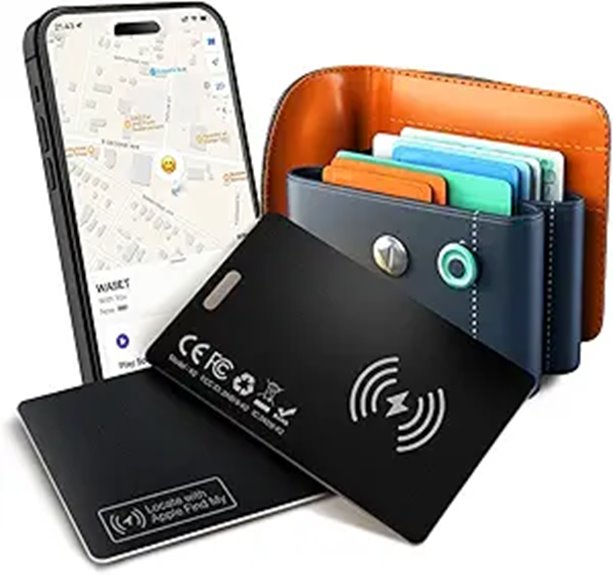 | Best For iPhone Users | Connectivity: Bluetooth (Find My) | Battery life / power: Rechargeable; up to 5 months per charge | Water resistance: IP68 | VIEW LATEST PRICE | Read Our Analysis |
| Wallet Tracker with 5-Year Battery IP68 Find My/Hub | 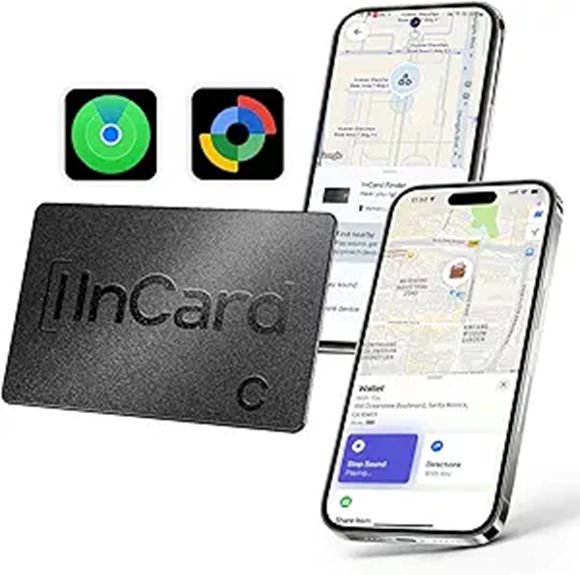 | Longest-Lasting Battery | Connectivity: Bluetooth | Battery life / power: 5-year battery life (Android); up to 3 years (iOS) | Water resistance: IP68 | VIEW LATEST PRICE | Read Our Analysis |
| Tile by Life360 Slim: Wallet Finder Bluetooth Tracker 1-Pack Black | 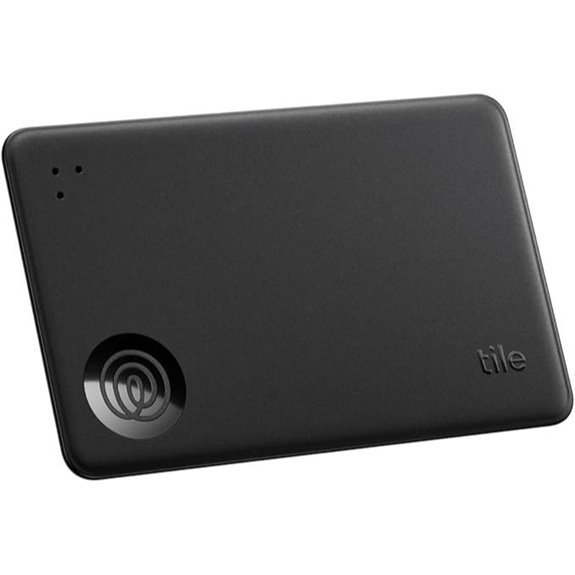 | Multi-Platform Champion | Connectivity: Bluetooth | Battery life / power: 3-year battery life | Water resistance: IP68 | VIEW LATEST PRICE | Read Our Analysis |
| Apple MFi Bluetooth Tracker for Find My iPhone Wallet Keys Locator | 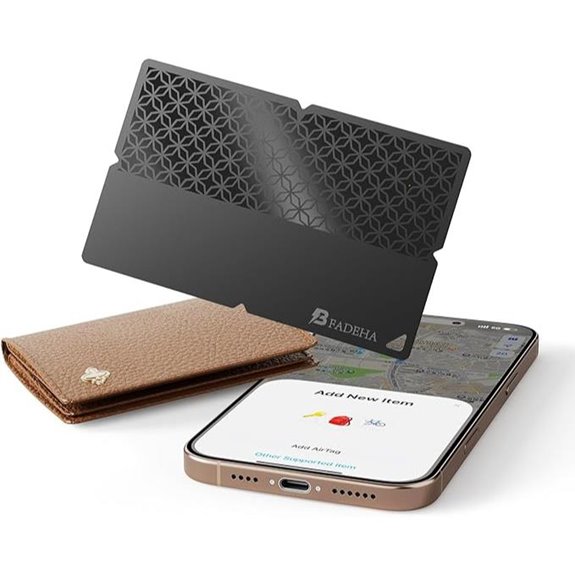 | Premium iOS Tracker | Connectivity: Bluetooth | Battery life / power: Long battery life; standby 5–10 years | Water resistance: IP67 | VIEW LATEST PRICE | Read Our Analysis |
| Apple Find My Bluetooth Tracker for Wallet & Keys | 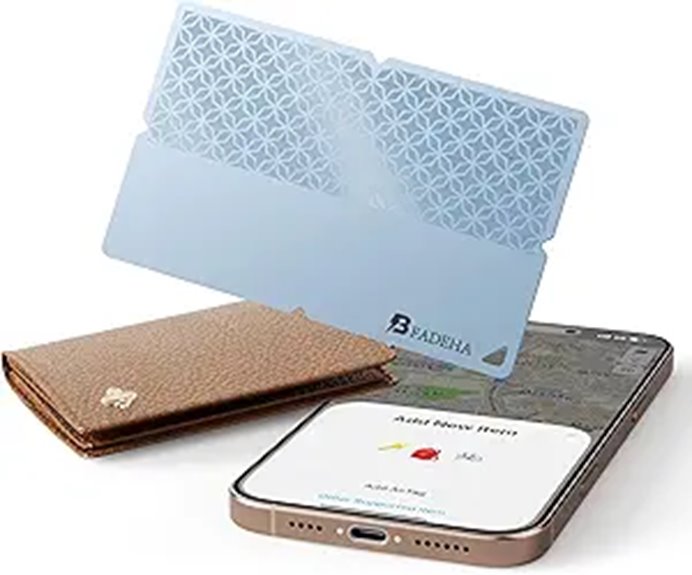 | Apple Find My Compatible | Connectivity: Bluetooth | Battery life / power: 5–10 years standby; 3-year life typical (listed as long battery) | Water resistance: IP67 | VIEW LATEST PRICE | Read Our Analysis |
More Details on Our Top Picks
Apple Airtag Wallet Tracker (IP68 Rechargeable)
The Apple Airtag Wallet Tracker stands out for iPhone users who want seamless Find My integration and a super-thin form. You’ll experience instant setup with a 5-second press and one-tap pairing, working directly in Find My for real-time tracking. It’s iOS-only and not Android-compatible, but you get Bluetooth real-time locate, with sound playback through the app and no extra apps needed. Ultra-thin at 1.5 mm, it fits wallet cards, passport holders, and slim cases, while IP68 withstands water exposure. Rechargeable via Qi, it charges in 1–2 hours and can last up to 5 months per charge.
- Connectivity:Bluetooth (Find My)
- Battery life / power:Rechargeable; up to 5 months per charge
- Water resistance:IP68
- Find/Locator ecosystem:Find My integration
- Form factor:Wallet-sized card
- Voice / audible alert:100 dB speaker
- Additional Feature:Qi wireless charging
- Additional Feature:Lost Mode contact sharing
- Additional Feature:Ultra-thin profile
Wallet Tracker with 5-Year Battery IP68 Find My/Hub
If you want a wallet tracker that lasts years without charging and works seamlessly with your existing Find My or Google Find Hub setup, this model stands out: a 5-year battery, IP68 durability, and universal compatibility. You connect without guesswork to Apple Find My and Google Find Hub, while millions of devices anonymously help pinpoint your item on a live map. It’s credit-card thin, only 1.7 mm, and fits wallets, passport sleeves, or bags. With 90–100 dB loud alerts, a Leave-Behind feature for iOS, IP68 protection, and no monthly fees, it’s a versatile, maintenance-light choice.
- Connectivity:Bluetooth
- Battery life / power:5-year battery life (Android); up to 3 years (iOS)
- Water resistance:IP68
- Find/Locator ecosystem:Find My + Google Find Hub
- Form factor:Credit-card thin
- Voice / audible alert:90–100 dB speaker
- Additional Feature:5-year battery life
- Additional Feature:Android compatibility
- Additional Feature:No monthly fees
Tile by Life360 Slim: Wallet Finder Bluetooth Tracker 1-Pack Black
With its ultra-slim profile, Tile by Life360 Slim is the best choice for anyone who needs a discreet wallet or passport locator that still packs a full range of features. You’ll find a thinnest tracker that slips into wallets, passports, and luggage, plus the ability to ring a misplaced Tile or view its last location in the free app. Double-press to ring your phone, even if silenced, and use the SOS button to discreetly alert your Life360 Circle in unsafe moments. Compatible with iOS and Android, it works with Life360 for shared maps and updates. IP68, 3-year battery, 350 ft range.
- Connectivity:Bluetooth
- Battery life / power:3-year battery life
- Water resistance:IP68
- Find/Locator ecosystem:Life360 integration
- Form factor:Slim wallet tracker
- Voice / audible alert:– (implied ringtone/find; features include ring via app)
- Additional Feature:SOS Life360 integration
- Additional Feature:Ring phone feature
- Additional Feature:3-year battery life
Apple MFi Bluetooth Tracker for Find My iPhone Wallet Keys Locator
This Apple MFi-certified Bluetooth tracker is the best pick if you live in the Find My iPhone ecosystem and want seamless wallet or key locating on iOS. You’ll pair easily: long-press the device to beep, open Find My, Add Item > Other Supported Item > Connect, and complete setup. In Find My, quick locate sounds your wallet and shows导航 on a map if distant. Expect a super-loud 100 dB alarm within Bluetooth range. With IP67 durability, long standby (5–10 years), and encryption, your data stays private. Dimensions are compact, weight light, and reviews strengthen confidence in Finder reliability.
- Connectivity:Bluetooth
- Battery life / power:Long battery life; standby 5–10 years
- Water resistance:IP67
- Find/Locator ecosystem:Find My integration
- Form factor:Wallet card (card-size)
- Voice / audible alert:100 dB alarm
- Additional Feature:5–10 year standby
- Additional Feature:IP67 waterproof/dustproof
- Additional Feature:NFC-enabled lost contact
Apple Find My Bluetooth Tracker for Wallet & Keys
The 2026 Apple Find My Bluetooth Tracker for Wallet & Keys stands out for iOS users who want seamless Find My integration, letting you play a sound and view a location on a map right in the Find My app. You pair it by long-pressing about 5 seconds, then Add Item > Other Supported Item > Connect, with quick setup. It uses Bluetooth, features up to 100 dB alarms, and IP67 durability for water and dust resistance. Location data stays encrypted, and Lost Mode shares your contact instantly via Find My. Dimensions are compact at 3.35 x 2.09 x 0.1 inches, weighing 1.13 ounces.
- Connectivity:Bluetooth
- Battery life / power:5–10 years standby; 3-year life typical (listed as long battery)
- Water resistance:IP67
- Find/Locator ecosystem:Find My integration
- Form factor:Wallet card (card-size)
- Voice / audible alert:100 dB alarm
- Additional Feature:NFC retrieval of contact
- Additional Feature:IP67 waterproof/dustproof
- Additional Feature:5–10 year standby
Factors to Consider When Choosing Smart Card Locator
When you pick a smart card locator, start with compatibility range to ensure it works with your devices. Then weigh battery longevity, durability rating, and the reliability of alert capabilities for real-time updates. Finally, consider the app ecosystem and ease of use, since seamless integration and strong alert options matter most.
Compatibility Range
Choosing a smart card locator that fits your devices means weighing compatibility breadth: some trackers work only with iOS, while others pair across iOS and Android or integrate with ecosystems like Find My or Google Find Hub. You’ll want to know whether a tracker uses Bluetooth with no monthly fees or links into larger ecosystems for live map locating. Cross-platform options let you locate from multiple apps, boosting visibility across phones, tablets, and computers. Universal or mixed compatibility signals you can share location data with more people and devices, which is helpful for families or teams. Remember that compatibility breadth often affects features like Leave-Behind Alerts and Lost Mode, which may be limited to specific OS ecosystems. Choose a model that aligns with your primary devices and sharing needs.
Battery Longevity
Battery longevity is a practical, ongoing cost and usability factor you’ll want to weigh alongside compatibility. In practice, you’ll see trackers rated from about 3 years to 5 years without charging, depending on design and usage. Some cards use replaceable batteries, like lithium metal or lithium manganese dioxide, while others offer rechargeable options via Qi or built-in long-life cells. Standby and idle drainage significantly affect real-world life, with self-discharge often around 0–2% per month for premium cells. Remember that 5-year claims usually assume minimal feature use, such as avoiding frequent loud alarms or continuous location updates. Battery life directly affects total cost of ownership, since longer-lasting designs cut maintenance and replacement needs, improve reliability, and reduce downtime during critical searches.
Durability Rating
Durability should be a top priority, since exposure to daily wear and the occasional drop can make or break a smart card locator. Start with an IP rating (look for IP67 or IP68) to gauge dust and water resistance, indicating how well it tolerates immersion and environmental exposure. Check the maximum immersion depth and duration (for example, IP68 up to 1 meter for 30–60 minutes) to understand real-world performance in wet conditions. Assess build quality through scratch-resistant materials and ultra-thin profiles, which influence daily wear and tear. Consider the stated durability life expectancy (5+ years) to gauge long-term reliability. Finally, review weight and chassis robustness (metal vs. plastic) to anticipate handling in wallets or pockets and resistance to drops.
App Ecosystem
Your smart card locator’s app ecosystem matters just as much as its hardware. Some trackers support a single ecosystem, like Apple Find My on iOS, while others offer cross‑platform compatibility across iOS and Android or integrate with extra hubs. The strength of the app ecosystem shows up in live map tracking, real‑time location sharing, and optional crowd‑sourced networks such as Find My, Google Find Hub, or Life360. Leave‑behind alerts and Lost Mode hinge on the app’s features and notifications. The availability of companion apps—whether free or paid, update cadence, and cross‑device compatibility—directly affects long‑term usability. Some trackers use one setup app; others synchronize with multiple services to unify your location experience.
Alert Capabilities
Understanding alert capabilities is indispensable when choosing a smart card locator. Most trackers emit loud alerts, about 90–100 dB, so you can locate items quickly within Bluetooth range. Some devices offer Leave-Behind Alerts, mainly on iOS, nudging you if you wander too far from your tracker. Lost Mode typically delivers instant alerts and can share contact info or enable NFC retrieval when the item isn’t found. Many trackers integrate with ecosystems like Find My or Life360, publishing location data and enabling map-based tracking across devices. Alarm and alert features are designed for IP-rated environments (IP67/IP68), ensuring visibility and notification reliability in challenging conditions. Prioritize alerts that suit your daily routines and environment.
Form Factor Flexibility
When choosing a smart card locator, form factor flexibility matters as much as features. You’ll encounter thickness options around 0.06 to 0.07 inches (1.5–1.8 mm), which keeps wallets compatible without bulging. Sizes vary too: some trackers are 3.35 x 2.09 inches, others 3.36 x 2.12 inches, shaping page and wallet slot fit. From ultra-slim credit-card styles to slightly thicker, still pocket-friendly designs, discretion changes with each choice. Several models slide into passport holders or document sleeves, broadening placements beyond wallets. The product line includes single-item packs and multi-purpose slims meant for keys, bags, and luggage, boosting overall form factor flexibility. Assess where you’ll place the tracker and how it impacts everyday concealment and access.
Privacy Safeguards
Privacy safeguards matter, but how robust are they in practice? You’ll want trackers that encrypt location data and avoid public storage, ensuring privacy across the Locate/Find My ecosystem. Look for devices that offer Lost Mode or instant alerts to share contact information when the item is found, boosting secure recovery without exposing details broadly. Check privacy disclosures that confirm protection during transmission and at rest, reducing exposure to third parties. Be aware that privacy controls can vary by platform, with iOS-only options sometimes differing from cross-platform solutions in exposure and management. Favor NFC-based contact retrieval and unidirectional notifications, which minimize data sharing while still enabling item returns. In sum, prioritize encryption, targeted notifications, and clear disclosures.
Common Questions
How Does Find My Network Compare to Third-Party Trackers?
Find My Network protects your location data with Apple’s encryption and device-based tracking, which isn’t openly shared with third parties. Third-party trackers may harvest location details or usage patterns, often exposing you to ads or data breaches. If you value privacy, you’ll likely prefer Find My’s end-to-end style and limited data sharing. However, check each app’s permissions, keep software updated, and disable unnecessary location access to minimize risks.
Do These Trackers Support Non-Apple Devices?
Some trackers do support non-Apple devices. If you’re using Android or Windows, look for Bluetooth-enabled locators with cross‑platform apps, open standards, and multi‑OS companion software. Check for Siri/Find My compatibility only on Apple devices, and verify that the app works via Bluetooth, web interface, or firmware‑level features on non‑Apple hardware. Ensure you can pair, locate, and ring items even when the primary device isn’t an iPhone or iPad.
What Is the True Battery Life Under Heavy Use?
The battery life under heavy use varies, but you’ll typically get about 6 to 12 hours. When you push Wi‑Fi, GPS, and notifications, expect the lower end, around half a day. Think of it as a fuel gauge: you’ll notice the needle drop faster with constant tracking. To stretch it, reduce screen brightness, disable unused sensors, and turn on power-saving modes. Carry a compact charger for longer adventures, and you’ll stay powered on.
Can Trackers Locate Items Without a Network Connection?
No, trackers can’t locate items without a network connection. You typically need Bluetooth proximity to pair, a nearby device relaying location, or an offline last-seen timestamp stored on the tracker. If you’re far from any network, you’ll see only the last known position, not live updates. You’ll gain updates again when you reconnect or come within range of a connected app, beacon, or network-enabled gateway. Consider offline capabilities only as recently seen data.
Are There Privacy Concerns With These Trackers?
Privacy concerns exist, yes. These trackers can expose your location, habits, and routines if data isn’t protected. You’ll want strong encryption, clear data retention policies, and transparent sharing controls. If a vendor shares info with third parties, you could lose anonymity. You’ll also face risk from physical tampering or malware. Keep firmware updated, use offline modes when possible, and review permissions. Guard your privacy like a lighthouse guiding ships—steady, watchful, and unyielding.